
Building Thermography
Drone Thermography — Building Energy Diagnostics
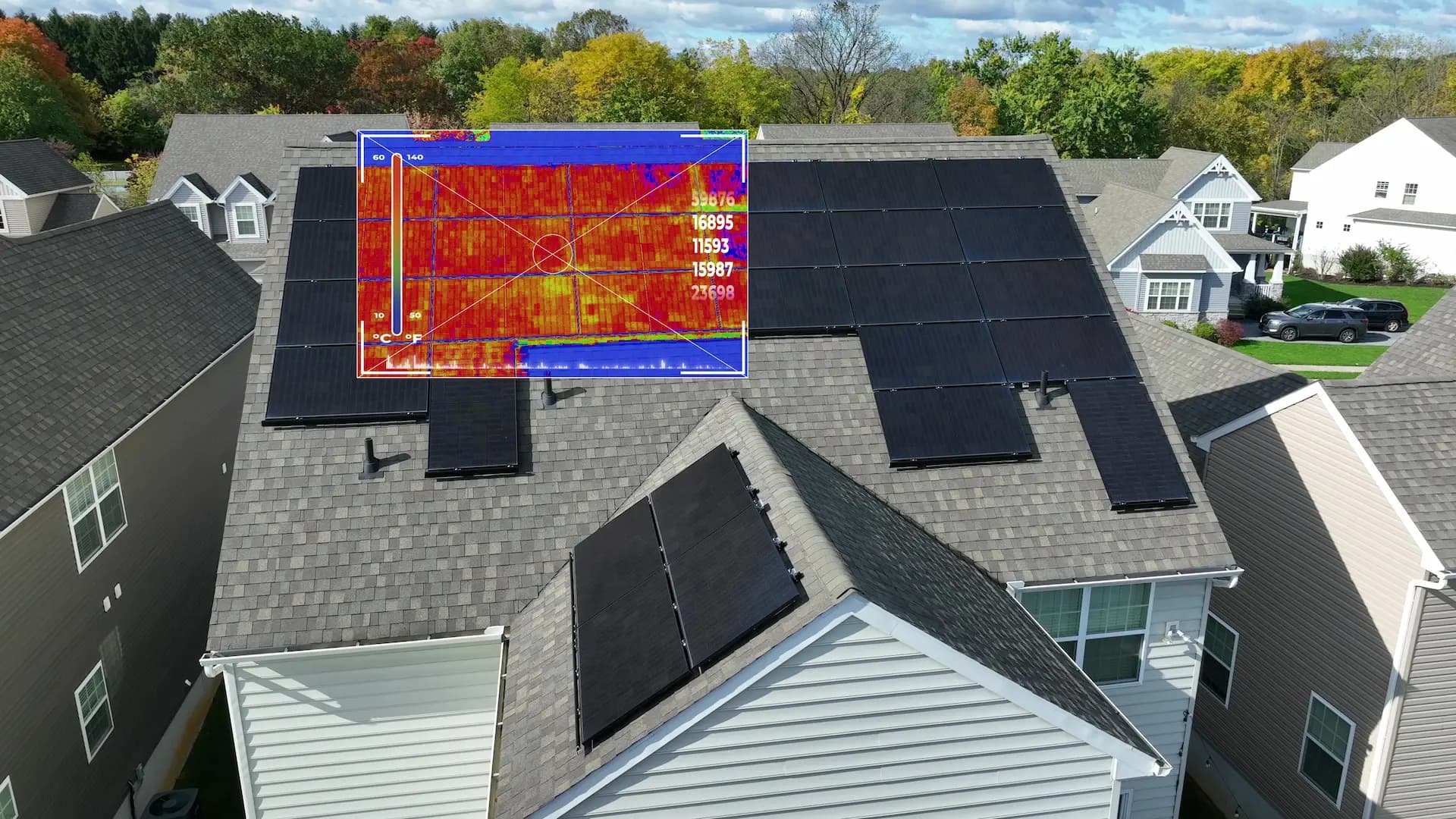
A thermal camera on a drone detects what the human eye cannot see: thermal bridges, moisture in walls and air leaks. The key to reducing heating bills.
1280×1024
Thermal resolution
±2°C
Measurement accuracy
FLIR
Radiometric cameras
24h
Report ready
What does drone thermography detect?
Thermal Bridges
Heat escape points through inadequate insulation, ring beams or wall corners. Every thermal bridge raises heating bills.
Damp and Water Ingress
Water and moisture in building elements are warmer or cooler than surrounding material — the thermal camera instantly locates them, even inside walls.
Roof Insulation Leaks
Heat escaping through roof insulation gaps appears as bright spots on thermal images. Precise localisation eliminates costly removal of entire roofing.
Solar Panel Diagnostics
Hot-spot detection on PV panels. We identify damaged cells, shading issues and faulty connections without disconnecting the installation.
Underfloor Heating Inspection
Complete temperature map of floor heating systems with zone identification and location of damaged or broken pipes.
Energy Audit Data
Radiometric TIFF images with precise temperature values, compliant with PN-EN 13187 and ISO 6781 standards. Accepted by energy auditors and building inspectorates.
Who is drone thermography for?
Drone thermography is an essential diagnostic tool wherever energy efficiency and building envelope integrity matter. Our surveys are conducted in accordance with PN-EN 13187 (thermal performance of buildings) and ISO 6781 (detection of thermal irregularities). Radiometric thermal cameras record precise temperature values (not just coloured images), making the data suitable for formal energy audits. Surveys are carried out during the heating season (October–March), when the temperature difference enables correct diagnostics.
Get Free QuoteHow does a drone thermographic survey work?
Consultation and scheduling
We agree on survey scope, building size and optimal timing. Thermography requires specific conditions — min. 10°C temperature differential, ideally early morning or evening.
Equipment preparation
We configure the thermal camera (1280×1024 px resolution, Super Resolution) and RTK module. We check weather conditions and airspace zones.
Thermal flight
The drone performs the planned flight, simultaneously capturing RGB and thermal imagery. Every image contains precise radiometric data with temperature values.
Analysis and report
We process thermal data, identify anomalies and prepare a PDF report with thermal maps, temperature values, GPS location and repair recommendations.
Thermal Inspection Pricing
Transparent pricing with no hidden costs. Travel up to 15 km from Wroclaw included.
Basic
up to 120 m²
790 zł
net
You save 200 zł
- Thermal scan of 4 facades + roof
- 15–20 infrared images
- RGB reference photos
- PDF report with recommendations
- Delivery within 48h
Standard
120–200 m²
1290 zł
net
You save 300 zł
- Everything in Basic, plus:
- Detailed thermal bridge analysis report
- Client portal access
- Radiometric TIFF data
- GPS-located defects
- Delivery within 24h
Premium
over 200 m²
1790 zł
net
You save 400 zł
- Everything in Standard, plus:
- Report per PN-EN 13187 standard
- Thermal orthomosaic of the roof
- Expert consultation (30 min)
- Before/after comparison documentation
- Priority delivery
All prices in PLN net. Travel up to 15 km from Wroclaw included. Beyond: +1.50 PLN/km.
When should you order thermography?
Frequently Asked Questions About Thermography
When is the best time for a thermographic survey?
Can thermography replace an energy audit?
What data does the report contain?
How high does the drone fly during thermography?
Does thermography detect PV panel damage?
How much does a drone thermographic survey cost?
Can thermography be done in summer?
Ready to get started?
Contact us and we'll send you a quote within 24h.